
When dental problems affect several areas of your mouth at once, treating one tooth at a time without an overall plan can make care feel disconnected. Full-mouth restoration brings the necessary procedures together into a coordinated treatment strategy designed to rebuild damaged teeth, replace missing teeth, improve function and create a healthier foundation for your smile.
Dr. Anil Dwivedi will evaluate your teeth, gums, bite, existing dental work and areas of tooth loss before determining which treatments belong in your plan. Some cases primarily involve restorative dentistry, while others may also require periodontal, endodontic, implant, orthodontic or cosmetic care.
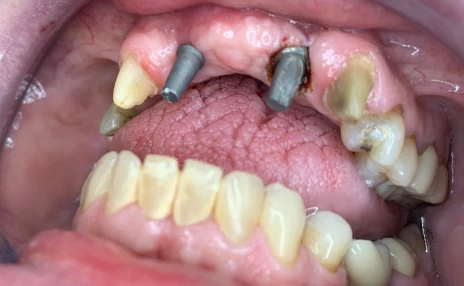
What Is Full-Mouth Restoration?
Full-mouth restoration is a comprehensive approach for rebuilding oral health when multiple teeth or supporting structures need treatment. Rather than referring to one specific procedure, it describes a coordinated plan made up of the individual treatments necessary to restore function, stability and appearance throughout the mouth.
Your treatment may involve only several areas or may extend across both dental arches. Our dentist will determine the appropriate sequence so urgent disease, unstable teeth and gum health are addressed before final restorative or cosmetic work is completed.
Who May Need a Comprehensive Restorative Plan?
Full-mouth restoration may be considered when dental needs have become too extensive to address effectively with one isolated procedure. Some patients have gradually accumulated damaged or missing teeth over time, while others need broader treatment after trauma, advanced disease or severe tooth wear.
Our dentist may discuss comprehensive restoration when you have:
- Multiple broken, cracked or severely worn teeth
- Several missing teeth
- Extensive or recurrent tooth decay
- Failing crowns, bridges or fillings in several areas
- Advanced periodontal problems affecting tooth support
- Teeth with infections or poor long-term prognoses
- Bite problems contributing to uneven wear or discomfort
- A combination of functional and cosmetic concerns
The presence of several dental problems does not automatically mean every tooth needs treatment. A comprehensive evaluation helps distinguish what can be maintained from what needs to be repaired or replaced.
Building the Treatment Plan in the Right Order
The sequence of care matters when several procedures depend on one another. Treating active infection or periodontal disease first can create a healthier foundation before permanent restorations are placed. Teeth that cannot be predictably saved may also need to be removed before replacement treatment is finalized.
Once urgent and foundational concerns have been addressed, our dentist can move into the restorative phases of care. Planning the sequence from the beginning helps prevent one procedure from interfering with another later.
Digital imaging, photographs and an intraoral scanner may be used to gather detailed records and coordinate different stages of treatment.
Dental Crowns for Damaged or Weakened Teeth
When a tooth has lost substantial structure but remains restorable, a dental crown may be used to protect and rebuild it. Crowns can restore teeth affected by large fillings, fractures, severe wear or root canal treatment.
Dr. Dwivedi has completed more than 2,500 crowns during his career and has more than 300 hours of continuing education in restorative dentistry. Selected cases may also benefit from the practice’s digital and same-day restorative technology.
Inlays, Onlays and Fillings When Less Tooth Structure Is Missing
Not every damaged tooth requires a crown. Smaller areas of decay may be restored with composite dental fillings, while moderate damage may sometimes be treated with dental inlays or onlays.
Choosing the appropriate restoration helps preserve healthy tooth structure while still providing the strength needed for normal function. Our dentist will determine how much tooth structure remains and which type of restoration provides appropriate support.
Replacing Missing Teeth With Dental Implants
Missing teeth may be restored with dental implants when adequate bone and oral health are present. Implants can support a single crown, a bridge or a larger full-arch restoration depending on the number of teeth being replaced.
Dr. Dwivedi has placed more than 1,000 implants and completed more than 1,000 implant restorations. He has also completed more than 500 hours of continuing education related to implant dentistry.
When one tooth is missing, a single-tooth implant may allow the space to be restored without relying on neighboring teeth for support. When many teeth are missing, implant-supported dentures may provide greater stability than a conventional removable prosthesis.
Bridges and Dentures for Tooth Replacement
Implants are not the only way to replace missing teeth. A dental bridge can replace one or more teeth by using surrounding teeth or implants for support, depending on the design.
For more extensive tooth loss, dentures and partials may restore chewing ability, speech and the appearance of the smile. The appropriate solution depends on how many teeth remain, their condition, available bone and your preferences for fixed or removable treatment.
Our dentist will compare these options as part of the overall restorative plan rather than assuming every missing tooth should be replaced the same way.
Saving Teeth With Endodontic Treatment
A tooth with an infected or inflamed pulp may still be worth preserving if enough healthy structure remains. Root canal treatment can remove infection from inside the tooth so it can later be restored and returned to function.
Dr. Dwivedi has completed more than 2,000 root canal treatments and more than 100 hours of continuing education related to endodontics.
If a previously treated tooth develops another problem, root canal retreatment or another form of endodontic care may be considered before deciding whether extraction is necessary.
When Tooth Extraction Becomes Part of the Plan
Some teeth cannot be predictably restored because of severe decay, fractures, periodontal damage or other structural problems. In those situations, tooth extraction may be the healthier option.
Planning the replacement before extraction can be especially helpful during full-mouth restoration. If an implant is expected later, our dentist can consider whether bone grafting or another site-preservation procedure should be performed when the tooth is removed.
This helps connect the surgical phase with the final restorative objective.
Healthy Gums Must Support the Restorations
Crowns, bridges and implants depend on healthy supporting tissues. If active gum disease is present, periodontal treatment may need to occur before extensive restorative work moves forward.
For patients with deeper periodontal pockets, scaling and root planing may be used to address bacterial deposits beneath the gumline. Areas of recession may require gum grafting or another periodontal approach when additional tissue support is needed.
Dr. Dwivedi has treated more than 2,500 periodontal and gum disease cases and has completed more than 300 hours of continuing education in periodontics.
Correcting Tooth Position Before Final Restorations
Sometimes teeth are healthier to restore after their positions have been improved. Crowding, uneven spacing or bite relationships can influence how crowns, veneers or replacement teeth need to be designed.
When appropriate, Invisalign may be incorporated before permanent restorative work. Moving teeth first can sometimes create better spacing and reduce the amount of restorative alteration required later.
Our dentist will determine whether orthodontics contributes enough benefit to justify including it in the larger plan.
Cosmetic Dentistry Within Full-Mouth Restoration
The primary goal of full-mouth restoration is to rebuild health and function, but appearance naturally matters when many visible teeth are being restored. Cosmetic dentistry may therefore become part of the planning process.
Color, tooth proportions, smile symmetry and the relationship between new restorations and existing teeth can all be considered as treatment progresses. Dental veneers may sometimes be incorporated for structurally healthy front teeth that require cosmetic changes, while crowns may be more appropriate when additional strength is needed.
For broader esthetic planning, digital smile design may also help visualize proportions and coordinate several procedures.
Full-Mouth Restoration vs. a Smile Makeover
A smile makeover is generally driven primarily by cosmetic goals, although restorative procedures may be included. Full-mouth restoration starts with broader health, structural and functional needs and may involve many areas of the mouth.
The two approaches can overlap. A patient rebuilding damaged or missing teeth may also want to improve color, shape or symmetry as the final restorations are designed.
Our dentist will distinguish between what is necessary to restore oral health and what is elective so you can make informed decisions about both.
Evaluating the Bite Before Rebuilding the Teeth
A restoration can be beautifully made but still fail prematurely if excessive forces are concentrated in the wrong areas. For that reason, bite relationships are an important part of comprehensive planning.
Our dentist will evaluate how the upper and lower teeth come together, where wear has developed and whether clenching or grinding may be contributing to damage.
When bite-related muscle tension or jaw symptoms are also present, TMJ treatment may be considered as part of the broader evaluation.
How Dental Technology Supports Complex Treatment
Comprehensive cases often require information from several different diagnostic tools. Dental technology can help our dentist study the teeth, bite, bone and restorative space before irreversible treatment begins.
Three-dimensional CBCT imaging may be particularly useful when implants, bone grafting or surgical procedures are involved. Digital scans can support restorative and orthodontic planning, while digital workflows may help coordinate the design of crowns and other restorations.
These tools support clinical judgment rather than replacing it.
Comfort During a Longer Treatment Plan
Full-mouth restoration may involve several appointments and different types of procedures. If dental anxiety makes extensive treatment difficult, our dentist can discuss whether sedation dentistry should be incorporated into appropriate stages of care.
Dr. Dwivedi completed an anesthesiology residency and has extensive sedation experience. The type of sedation considered depends on your medical history, treatment being performed and individual comfort needs.
How Long Does Full-Mouth Restoration Take?
There is no standard timeline because the procedures included can vary considerably. A plan involving fillings and crowns may progress much faster than one involving periodontal therapy, orthodontics, extractions, grafting and dental implants.
Some stages also require biological healing before treatment can continue. Our dentist will organize the plan into logical phases and explain which procedures can be completed together and which require time between appointments.
The objective is to move efficiently without compromising healing or the quality of the final result.
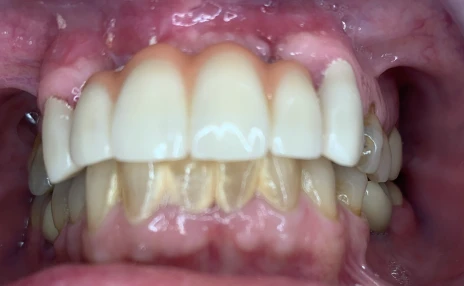
Experience With Comprehensive Restorative Care
Dr. Dwivedi has completed more than 250 hours of continuing education related to prosthodontics and full-mouth restorative care in addition to extensive education in restorative dentistry, implants, periodontics, endodontics, orthodontics and oral surgery.
His clinical experience includes thousands of crowns and restorative cases as well as substantial experience with bridges, dentures, implants and other treatments commonly incorporated into complex rehabilitation.
That breadth of experience allows the individual pieces of treatment to be considered as part of one larger restorative plan.
Rebuild Your Smile With One Coordinated Plan
Full-mouth restoration in Vienna, VA, can bring several dental needs together into a structured plan instead of treating each concern independently. Whether treatment involves damaged teeth, missing teeth, gum disease, bite problems or a combination of issues, our dentist can determine which procedures should be completed and in what order.
Contact our office at 703-734-1080 to schedule a consultation and begin developing a comprehensive plan for restoring your oral health, function and smile.
Frequently Asked Questions About Full-Mouth Restoration
What is full-mouth restoration?
Full-mouth restoration is a coordinated treatment plan used when several teeth or areas of the mouth need significant restorative care. It may combine crowns, implants, bridges, dentures, periodontal treatment, root canal therapy, orthodontics or other procedures depending on your needs.
Is full-mouth restoration the same as a smile makeover?
No. Full-mouth restoration is generally driven by functional, structural and oral-health needs, while a smile makeover is primarily cosmetic. The two can overlap when restorative treatment also changes the appearance of the smile.
Do all of my teeth need to be treated during full-mouth restoration?
Not necessarily. Healthy, stable teeth may require no treatment at all. Our dentist will determine which teeth can be maintained, which need restoration and which may require replacement.
Can dental implants be part of full-mouth restoration?
Yes. Implants may replace individual missing teeth or support larger bridges and full-arch restorations. Our dentist will evaluate your bone, gums and restorative needs before determining whether implants belong in the plan.
What happens if I have gum disease?
Active periodontal disease generally needs to be controlled before extensive permanent restorative work is completed. Our dentist will determine what periodontal treatment is necessary and when restorative treatment can safely proceed.
How long does full-mouth restoration take?
The timeline depends on the procedures included. Treatment involving implants, orthodontics, grafting or periodontal therapy may require healing or movement over several months, while other restorative procedures can be completed more quickly.
Can sedation be used during full-mouth restoration?
Sedation may be appropriate for selected procedures or patients with dental anxiety. Our dentist will review your medical history and treatment plan before determining which comfort options are appropriate.
How do I get started with full-mouth restoration?
Call 703-734-1080 to schedule a consultation with our dentist. Your teeth, gums, bite and existing dental work can be evaluated so the necessary treatments can be organized into a coordinated plan.