
Restorative dentistry focuses on repairing damaged teeth, replacing missing teeth and rebuilding areas of the mouth that no longer function as they should. Treatment can be as simple as restoring a small cavity or as comprehensive as coordinating several procedures to rebuild a worn, damaged or incomplete smile.
Dr. Anil Dwivedi will evaluate your teeth, gums, bite and existing dental work before recommending treatment. The goal is to preserve healthy tooth structure whenever possible while restoring comfort, strength and function with an individualized plan.
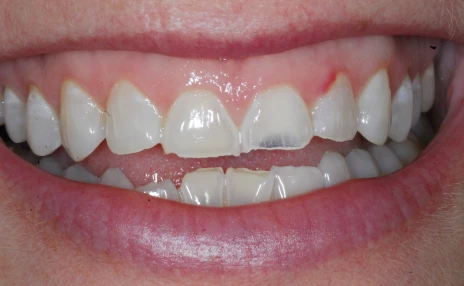
What Is Restorative Dentistry?
Restorative dentistry includes treatments used to repair or replace tooth structure that has been damaged by decay, fractures, wear, infection or tooth loss. The specific procedure depends on how much healthy structure remains and what the tooth needs to function predictably.
Some restorative procedures rebuild a natural tooth, while others replace a missing tooth entirely. Our dentist will determine whether a conservative restoration is sufficient or whether the tooth requires more extensive coverage or replacement.
Our Restorative Dental Services
- Composite Dental Fillings
- Full-Mouth Restoration
- Same-Day Dental Crowns
- Dental Inlays & Onlays
- Sensitive Teeth Therapy
- Toothbrush Abrasion Correction
When Restorative Treatment May Be Needed
Restorative treatment may be appropriate when damage, decay or tooth loss begins affecting comfort, chewing or the stability of the surrounding teeth. Our dentist may recommend treatment for concerns such as:
- Dental cavities
- Chipped, cracked or broken teeth
- Worn tooth structure
- Large or failing fillings
- Teeth weakened after root canal treatment
- Missing one or more teeth
- Sensitivity caused by structural damage or exposed dentin
- Several damaged teeth requiring coordinated treatment
The appropriate treatment depends on the cause and extent of the problem rather than simply choosing the largest restoration available.
Composite Fillings for Smaller Areas of Damage
Smaller cavities and localized areas of tooth damage may often be repaired with composite dental fillings. Tooth-colored composite material can rebuild the damaged area while blending with the surrounding enamel. Fillings are generally best suited to teeth that still have enough healthy structure to support a direct restoration. Our dentist will evaluate the size and location of the defect before determining whether a filling provides adequate strength.
Dental Inlays and Onlays for Moderate Tooth Damage
When a tooth needs more support than a filling can provide but does not require full crown coverage, dental inlays and onlays may offer a more conservative option. An inlay fits within the cusps of a tooth, while an onlay extends over one or more cusps to reinforce areas that have been weakened. These restorations allow our dentist to preserve healthy tooth structure while rebuilding the portions that need additional support.
Dental Crowns for Weakened Teeth
A dental crown covers the visible portion of a tooth when more extensive protection is needed. Crowns may be recommended for teeth with large fractures, extensive decay, substantial wear or weakened structure after endodontic treatment. Selected cases may also benefit from same-day restorations when the clinical situation is appropriate. Dr. Dwivedi has completed more than 2,500 crowns and more than 300 hours of continuing education related to restorative dentistry.
Restoring Teeth After Root Canal Treatment
When infection or inflammation develops inside a tooth, root canal treatment may be necessary to preserve it. After the internal treatment is completed, the tooth often needs a restoration to protect the remaining structure. Back teeth frequently require crowns because they absorb significant chewing forces, while the appropriate restoration for other teeth depends on how much healthy structure remains. Our dentist will determine when the tooth is ready for its final restoration and how much coverage it needs.
Replacing Missing Teeth With Dental Bridges
A dental bridge can replace one or more neighboring missing teeth with a fixed restoration. Traditional bridges use nearby teeth for support, while implant-supported bridges rely on dental implants. A bridge can restore chewing function and fill an open space without requiring a removable appliance. Dr. Dwivedi has completed more than 500 bridges and has extensive experience coordinating fixed tooth-replacement treatment.
Dentures and Partials for Multiple Missing Teeth
When several or all teeth are missing, dentures and partials may provide a removable way to restore function and appearance. A partial denture replaces some missing teeth while fitting around those that remain. A complete denture replaces an entire upper or lower arch. Dr. Dwivedi has completed more than 500 dentures and more than 500 partial dentures and has more than 250 hours of continuing education related to prosthodontics and full-mouth restorative care.
Dental Implants for Tooth Replacement
Dental implants can replace missing tooth roots and support crowns, bridges or larger prosthetic restorations. A single-tooth implant may replace one missing tooth without preparing adjacent healthy teeth, while implant-supported dentures can provide additional stability when many teeth are missing. Dr. Dwivedi has placed more than 1,000 implants, completed more than 1,000 implant restorations and completed more than 500 hours of continuing education related to implant dentistry.
Bone Grafting Before Implant Treatment
Dental implants need adequate bone for support. If a missing-tooth area has experienced substantial bone loss, bone grafting may be considered before or during implant treatment. Our dentist will evaluate the available bone and determine whether grafting is necessary. When an upper back-tooth area lacks enough vertical bone beneath the sinus, sinus augmentation may also be considered in selected implant cases.
When a Tooth Cannot Be Restored
Restorative dentistry emphasizes preserving natural teeth when that can be done predictably. Some teeth, however, are too severely fractured, decayed or compromised by periodontal disease to provide a stable foundation for restoration. In those cases, tooth extraction may be necessary before a replacement can be planned.
Whenever possible, our dentist will discuss replacement options before extraction so the surgical and restorative phases can be coordinated.
Healthy Gums Support Restorative Treatment
Crowns, bridges, implants and other restorations depend on healthy gums and supporting bone. If active periodontal disease is present, periodontal treatment may need to occur before permanent restorative work is completed. For deeper bacterial deposits beneath the gumline, scaling and root planing may be recommended.
If significant gum recession has exposed root surfaces or reduced tissue support, receding gum therapy, gum grafting or gum tunneling may be considered depending on the condition.
Restoring Worn and Sensitive Teeth
Tooth wear can develop from grinding, aggressive brushing, erosion or a combination of factors. Treatment depends on both the amount of structure lost and the reason the wear developed. Patients with discomfort may benefit from sensitive teeth therapy, while localized brushing wear may require toothbrush abrasion correction. If bite-related stress or jaw tension contributes to the problem, TMJ treatment may also be worth evaluating.
Full-Mouth Restoration for Complex Dental Needs
When several teeth are damaged, missing or heavily restored, treating each problem independently may not create the most coordinated result. Full-mouth restoration brings multiple procedures together into one structured treatment plan. Care may involve crowns, fillings, bridges, implants, dentures, periodontal treatment, endodontics or other procedures completed in a planned sequence. Dr. Dwivedi has completed more than 250 hours of continuing education related to prosthodontics and full-mouth restorative care.
Restorative Dentistry and Prosthodontics
Restorative dentistry and prosthodontics overlap when treatment involves rebuilding or replacing teeth. Restorative dentistry often includes fillings, crowns and other repairs to individual teeth. Prosthodontic treatment becomes especially relevant when tooth replacement or more complex reconstruction involves bridges, dentures, implants or several restorations working together. Our dentist will determine how comprehensive the treatment plan needs to be.
Combining Restorative and Cosmetic Dentistry
Restorative treatment is primarily designed to improve health and function, but appearance is also considered when visible teeth are being repaired. Cosmetic dentistry may overlap with restorative care when tooth shape, color or proportions are also part of the treatment goals.
For selected front teeth, dental veneers may be appropriate when the underlying tooth is structurally healthy but cosmetic changes are desired. For more extensive aesthetic planning, smile makeovers can coordinate several cosmetic and restorative procedures.
Using Dental Technology to Plan Restorative Care
Accurate records help our dentist determine how teeth fit together and how restorations should be designed. Dental technology may be incorporated when it improves diagnosis, planning or restorative workflows. An intraoral scanner can create detailed digital models for many restorative procedures, while CBCT imaging may be useful when implants, bone or surgical anatomy need three-dimensional evaluation. The technology selected depends on the treatment being planned.
Comfort During Restorative Treatment
Many restorative procedures can be completed with local anesthesia. For patients who experience significant dental anxiety or require more involved treatment, sedation dentistry may also be considered. Depending on your needs, options may include nitrous oxide, oral conscious sedation or other forms of sedation when clinically appropriate. Dr. Dwivedi completed an anesthesiology residency and has extensive experience providing sedation care.
Maintaining Restorative Results
A restoration still depends on healthy surrounding teeth and gums. Daily brushing, interdental cleaning and regular professional care help protect the margins around fillings, crowns, bridges and implant restorations. Routine general recare allows our dentist to monitor restorations for wear, decay, bite changes or gum problems. Patients with more complex dental needs may benefit from advanced recare or a customized maintenance schedule based on their treatment history.
Experience With Restorative Dental Care
Dr. Dwivedi has completed more than 5,000 fillings and restorative cases, more than 2,500 crowns and hundreds of bridges, dentures and implant restorations. He has also completed more than 300 hours of continuing education related to restorative dentistry. That experience supports treatment planning across a wide range of needs, from repairing a single damaged tooth to coordinating complex restorative care across several areas of the mouth.
Repair, Replace and Protect Your Smile
Restorative dentistry in Vienna, VA, can address damaged, decayed or missing teeth with treatment matched to the amount of repair you actually need. Our dentist can help determine what can be preserved, what should be restored and whether any missing teeth need replacement.
Contact our office at 703-734-1080 to schedule a consultation and learn which restorative options are appropriate for your smile.
Frequently Asked Questions About Restorative Dentistry
What is restorative dentistry?
Restorative dentistry focuses on repairing damaged teeth and replacing missing teeth. Treatment may include fillings, inlays, onlays, crowns, bridges, dentures, implants and more comprehensive restorative plans.
How do I know whether I need a filling, inlay, onlay or crown?
The recommendation depends on how much healthy tooth structure remains and how much support the tooth needs. A filling may repair a smaller defect, while an inlay, onlay or crown may be appropriate as the amount of damage increases.
Can restorative dentistry replace missing teeth?
Yes. Missing teeth may be replaced with bridges, dentures, partial dentures or dental implants depending on the number of missing teeth, available support and your treatment goals.
Can a damaged tooth always be saved?
No. Many damaged teeth can be restored, but severe fractures, decay, infection or periodontal damage may make extraction necessary. Our dentist will determine whether the tooth has a predictable restorative prognosis.
What is the difference between restorative dentistry and cosmetic dentistry?
Restorative dentistry is primarily focused on rebuilding health, structure and function. Cosmetic dentistry focuses more directly on appearance, although the two often overlap when visible teeth are restored.
How long do dental restorations last?
Longevity varies according to the type of restoration, tooth condition, material, bite forces, oral hygiene and other factors. Regular monitoring helps identify wear or problems before they become more extensive.
Can sedation be used for restorative dental treatment?
Yes, sedation may be appropriate for selected procedures or patients with dental anxiety. Our dentist will review your medical history and treatment needs before determining which options are appropriate.
How do I get started with restorative dentistry?
Call 703-734-1080 to schedule a consultation with our dentist. We can evaluate your teeth, gums, bite and existing dental work and recommend treatment based on what needs to be repaired or replaced.